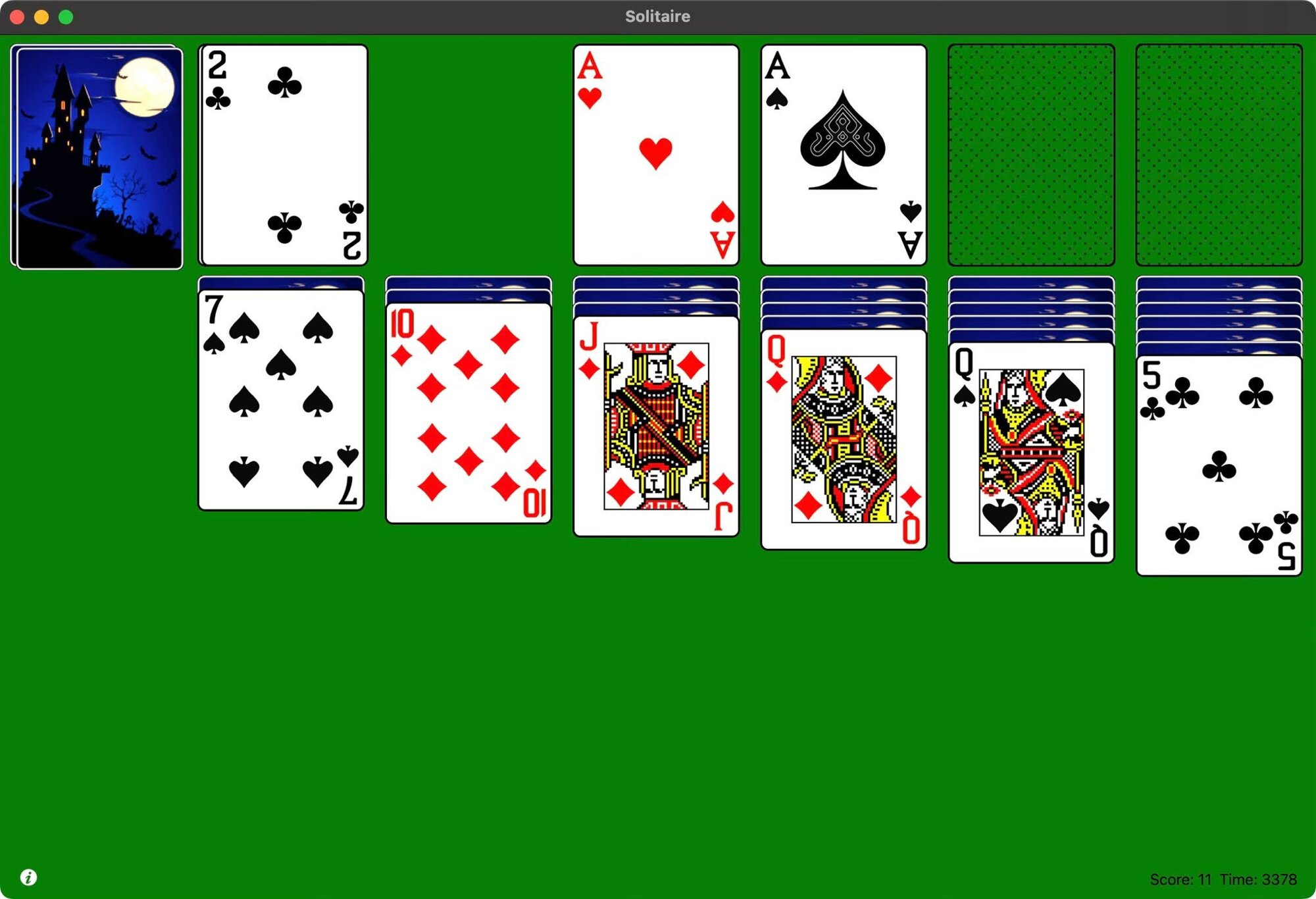
In November 2025, the cumulative install count for Classic Solitaire on Windows quietly crossed 1.3 million. There was no launch event, no press release, no moment where we sat back and felt like we had made something. It was a counter incrementing in a dashboard, same as every other day. That is probably the most honest possible summary of what thirteen years of shipping a solitaire game actually looks like.
Where It Started
We launched on iOS in 2012; Android followed shortly after. The goal was a clean Klondike implementation close to what Windows users had grown up with, without the timers and energy bars that were already becoming standard in mobile card games. It seemed obvious that the game did not need those things.
The install curve has never looked like a hockey stick — it is a slow uphill road with two notable steps: 2014, when we shipped on the Windows Store and reached users searching for something that felt like the old Microsoft Solitaire, and 2019, when we consolidated our Android SKUs. Most installs, across all platforms, come from organic search. Someone types "classic solitaire" in an app store and finds us. That is what happens when you ship something people were already looking for.
What the Data Actually Shows
After thirteen years of session logs, a few patterns have become clear enough that we are confident in them.
Median session length sits between four and six minutes. The modal session — the most common one — is closer to three minutes. That is roughly one hand of Draw Three, maybe two hands of Draw One. People are not sitting down for extended play sessions; they are filling gaps. A commute, a few minutes before a meeting, the last thing before putting down the phone at night. The game fits those slots because there is no friction to starting and no penalty for stopping.
About seventy percent of our users play Draw Three exclusively. Thirty percent play Draw One. Very few switch between them. People seem to find their preferred mode quickly and stay there, which tells us the two variants are genuinely different experiences rather than difficulty settings for the same game. Draw Three rewards a different kind of planning and tolerates a different kind of patience.
Day-30 retention is strong relative to other casual card games. We think this is a function of low-commitment sessions rather than anything we did with re-engagement mechanics, because we do not have those. The most frequently changed setting is the card back, followed by the table felt — and the classic green is the clear favourite. People want the game to look like the one they remember.
What We Changed
Three things changed significantly over the thirteen years, and all three were harder than they looked.
Display scaling took longer than it should have. When we shipped in 2012, screens were a predictable size. By 2018 we were dealing with tablets, foldables, and aspect ratios nobody had planned for — rebuilding the layout engine cost months we had not budgeted. On Android, low-memory conditions were a recurring problem; moving to a single texture atlas and targeting sixty frames per second on decade-old hardware required real care, and we still test on older devices before every release.
Undo and save state were the decisions we got most wrong: we held back too long. A purist instinct said undo changes the game. Users said, politely and persistently, that they wanted to take a phone call without losing their hand. They were right. We added both eventually; feedback was immediate and positive. We should have done it sooner.
What We Refused to Add
The list of things we did not build is longer than the list of things we did. No required login. No timers, energy bars, or daily-streak mechanics. No card-pack monetisation, no cosmetic gacha, no interstitial ads between hands. Every one of those would have changed the experience into something other than what we set out to build.
The cost is real: on a revenue-per-user basis, we are probably earning an order of magnitude less than the leading free-to-play solitaire titles. The benefit is that the audience that found us in 2012 is still here. That is a reasonable exchange, even if not the most profitable one.
What Comes Next
The roadmap is not dramatic. We want to stay current with OS releases across all platforms, ship a set of authentic period card-back themes for people who remember a specific era of digital solitaire, and finally add proper phone-landscape support — which is embarrassingly late. This website is our experimentation venue; the mobile apps move conservatively because our users there have strong expectations, and the web version lets us try things before committing them to the apps.
Thirteen years is a long time to work on one game. We do not have a tidy lesson to draw from it. Mostly we are grateful that people kept finding us, and that the thing we built in 2012 is still recognisably the same thing today. If you have played any of our versions over the years, or if you found us recently through a search: thank you. You can play the game now on the Game page, and if you have feedback or just want to say something, the Contact page is always open.